
The long-span cable-supported PV tracker is purpose-built for large-scale PV plants on flat sites such as level deserts and open water surfaces. Featuring structural mechanics innovation, bearing-free & lubrication-free technology, lightweight minimalist drive, AI intelligent wind protection and owner-participated open pre-verification, it achieves breakthroughs across all performance dimensions, delivering a new-generation tracking solution for global flat-site PV projects that combines low investment, low carbon emissions, high energy yield, long service life and low maintenance.
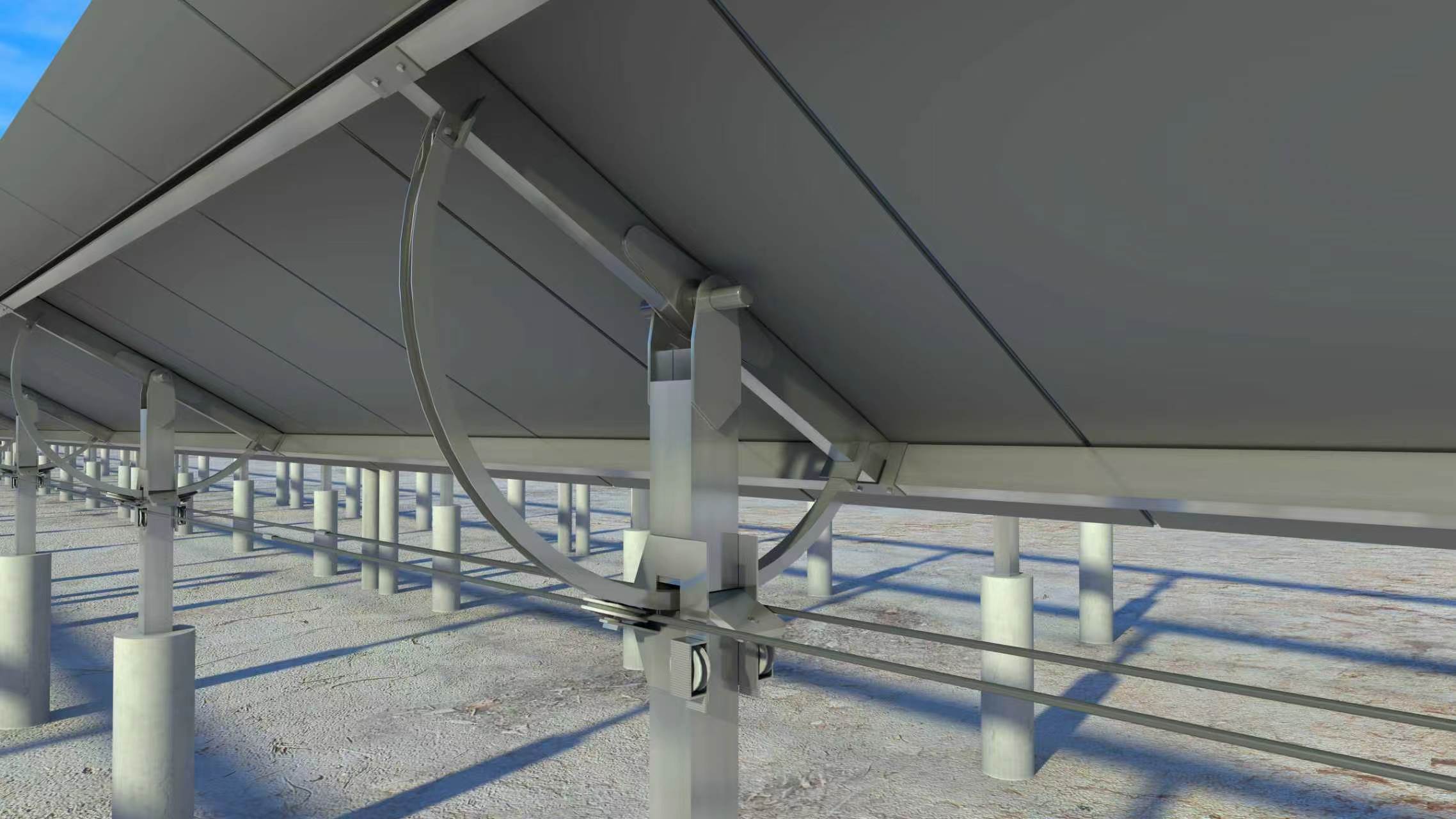
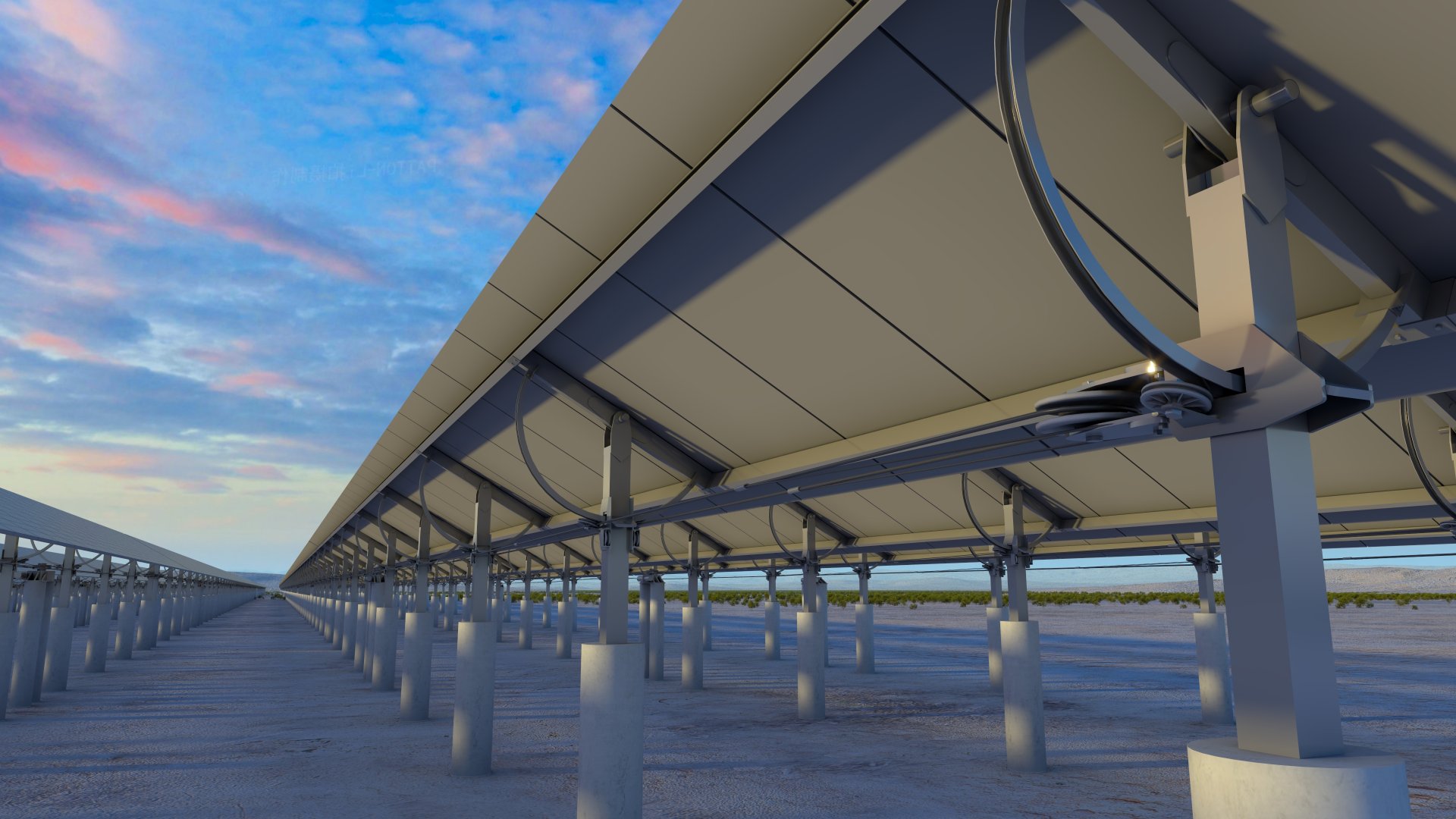
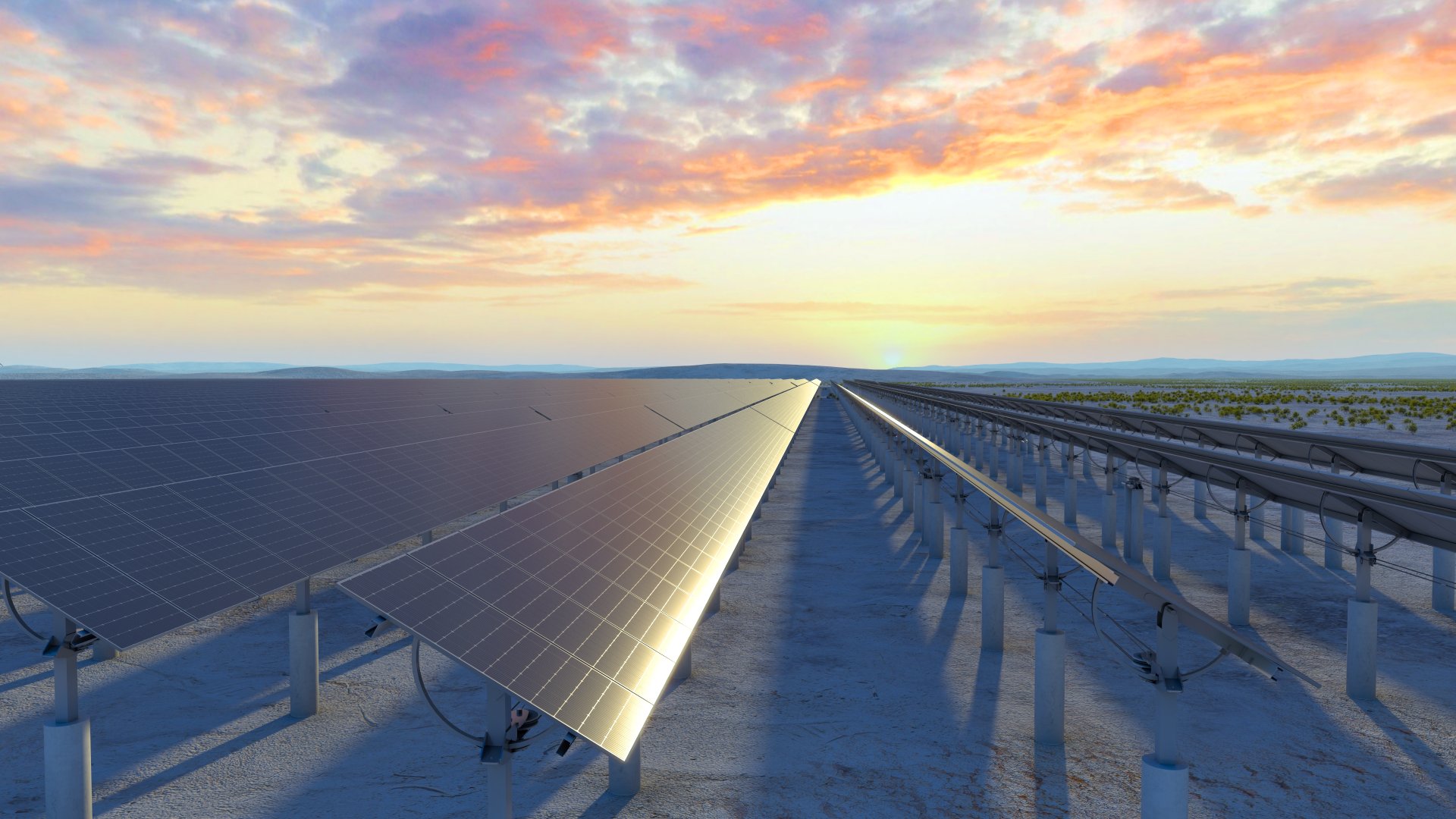
The flagship product of Tianjin Aqini New Energy Technology Co., Ltd. is the cable-supported ultra-long PV tracker, engineered for large-scale PV plants built on flat deserts and open water surfaces. Featuring mechanical innovation, bearing-free & lubrication-free design, minimalist driving architecture, AI wind protection and owner-participated pre-production verification, it delivers a new-generation tracking solution for flat-site global solar projects with lower CAPEX, reduced carbon footprint, higher energy yield, long service life and minimal maintenance.
Compared with conventional trackers, our design saves approximately 40% steel consumption. Thanks to highly modular split design, stacking volume is cut by 30%. It greatly reduces raw material expenses, container occupancy and ocean freight costs. Less steel also lowers embodied carbon across the project lifecycle, helping overseas assets optimize carbon footprint and mitigate EU carbon tariff, achieving triple cost reduction on materials, logistics and carbon compliance.
The tracker supports continuous ultra-long arrays ranging from 300 m to 1000 m, with capacity for more than 520 modules per array. It adopts an industry-leading minimalist drive configuration: one ultra-low-power motor (≤180W), one slew drive and one tracking controller for the entire array. This eliminates over 90% of electrical failure points and lowers system failure risk. Built with independent locking on each vertical post, the system requires no dampers at all, removing the long-term safety risks caused by damper aging, leakage and failure.
We achieve a revolutionary breakthrough with a fully bearing-free, lubrication-free hinged structure. All rotating and joint positions discard conventional sliding or rolling bearings, requiring no grease maintenance. Free from bearing corrosion, jamming, abrasion and abnormal noise, the system is naturally tailored for a 25-year outdoor service life and withstands repeated accelerated fatigue cycles, drastically cutting lifetime maintenance and mechanical loss.
Equipped with AI predictive wind protection, our system redefines the passive wind safety logic widely used in the industry. The algorithm predicts extreme wind conditions and only triggers protective stowage at wind speeds above 30 m/s. Under moderate strong winds, modules remain in tracking position to maximize annual power generation and improve plant revenue.
Following the validation standards of mature mechanical industries such as automotive, agricultural machinery and home appliances, we have established an exclusive accelerated marathon fatigue testing system, filling the global gap in pre-delivery full-tracker validation for PV trackers. Unlike many suppliers relying on internal tests and paper certificates, owners, supervisors and EPC teams may witness on-site testing prior to mass production. The test verifies structural fatigue, cyclic load and extreme-condition performance equivalent to a full 25-year service life. All structural risks are identified before delivery. Public witness testing replaces vendor self-certification to guarantee stable operation for 25 years.
The tracker adopts a split plug-and-play modular structure without on-site calibration. Two skilled workers can complete slew drive replacement for 1MW within one hour, with immediate re-commissioning after replacement. It simplifies construction and maintenance and reduces full-lifecycle OPEX. Backed by the world-class PV steel industrial cluster in Tianjin, we achieve an annual delivery capacity exceeding 30GW for large-scale global clean energy projects.
Conventional single-axis trackers deployed worldwide suffer from inherent reverse-lever loading defects and eccentric dead load issues, which are the root causes of vibration, progressive wear and even collapse. In traditional designs, the slew drive serves as a short effort arm while the torque tube and PV array form a long load arm. Under strong wind, the force reverses: the array becomes a long effort arm prying the slew drive, creating persistent oscillation and accumulated gear backlash. This fundamental structural flaw cannot be fully resolved by dampers or wind protection; prolonged operation leads to loosening, wear, tilting and collapse risks. Furthermore, modules are mounted outside the torque tube, generating large eccentric secondary bending moments at 30°~45° tracking angles, which worsens structural fatigue under wind loads.
Beyond core mechanical weaknesses, conventional trackers carry multiple chronic engineering pain points: dense drive units with many failure points, dampers prone to aging, bearings requiring continuous lubrication and high maintenance labor, time-consuming component replacement, and limited third-party pre-delivery verification, leaving high uncertainty for long-term plant operation.
Our cable-supported ultra-long PV tracker is a comprehensive solution designed specifically to address these chronic structural weaknesses of conventional trackers. It eliminates reverse-lever mechanics and eccentric load at the source, removes dampers, bearings and lubrication-related vulnerable parts, and integrates AI wind protection plus owner-witnessed accelerated fatigue testing. It resolves safety hazards, excessive steel consumption, heavy maintenance, generation loss and low credibility of product validation all at once.
Through structural innovation, we reset benchmarks for reliability, economy and verification standards of PV trackers, driving full technical upgrade of the tracking industry and leading global flat-site solar projects toward safer, low-carbon and more economical development.
Copyright © 2026 Tianjin Aqini New Energy Technology Co., Ltd.. All rights reserved Sitemap
 English
 日本語
日本語 العربية
 French
 Deutsch
 Español
 Portuguese
 Русский
 Bahasa Indonesia
 中文
中文