

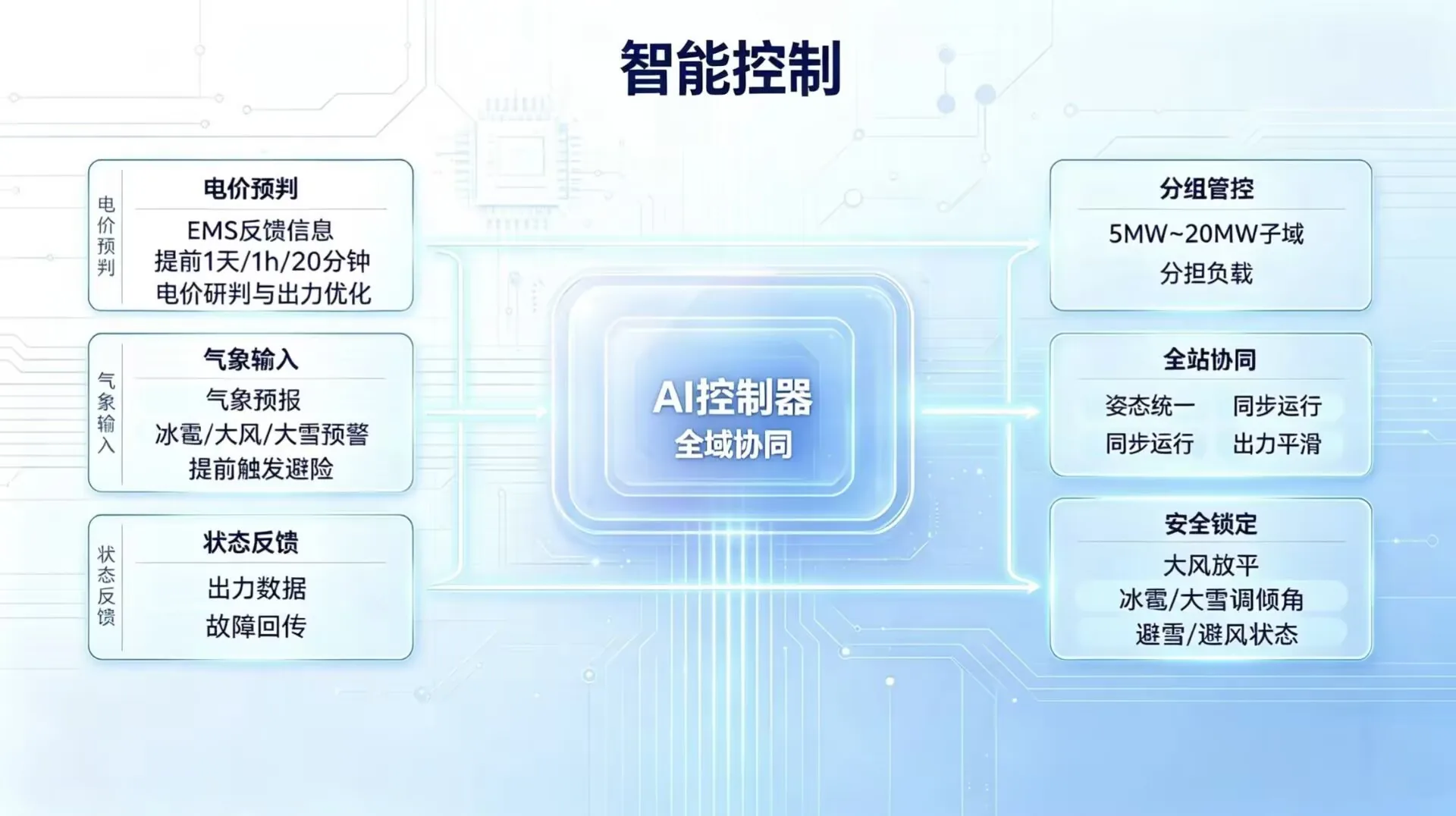
Three-layer global collaborative intelligent architecture | Compliant with domestic EMS and the 'four-ables' grid dispatch standards AI big-data dynamic strategy control, adapted to the electricity spot market, optimizing station-wide generation revenue AI meteorological pre-warning protection with active hazard avoidance for strong wind, hail and heavy snow Grouped collaborative control for extra-large power stations, with unified posture and stable output across the whole station A pragmatic technology philosophy: no inflated specifications, focused on safe, stable and efficient power generation.
This controller adopts a three-layer global collaborative photovoltaic regulation architecture. It is upgraded from the traditional open-loop astronomical trajectory tracking to a full-station collaborative intelligent control system, specially developed for flat ground photovoltaic power stations, realizing integrated management of power generation optimization, grid adaptation and meteorological protection.
The system can connect with mainstream international EMS, SCADA and plant controllers to achieve two-way data interaction: Upload data in real time: bracket posture, operating status, fault information and adjustable power generation capacity; Issue unified scheduling commands according to grid parameters and plant output. Hundred-megawatt to gigawatt-level power stations adopt communication grouping control. Subdomains are divided at 5MW–20MW intervals. All groups execute the same commands and maintain consistent posture across the whole station. Grouping is used to share communication load, avoid bus congestion and improve the problems of scattered control and large power output fluctuation.
It is equipped with an AI meteorological early warning and protection system. Combined with meteorological big data for active prediction, it adjusts the bracket tilt angle or flattens brackets in advance to protect modules from damage caused by strong wind, hail and heavy snow. Local wind speed sensors serve as the final safety backup to form a dual protection mechanism.
Three communication architectures are supported: wired RS485 bus, LoRa wireless Mesh and hybrid networking. Synchronized operation is guaranteed within each subdomain. It has the functions of closed-loop self-inspection, posture verification and fault feedback, suitable for long-term frequent fine adjustment of brackets.
Intelligent control logic: optimize the tracking angle during sunshine hours for stable power generation; automatically limit the adjustment range during grid fluctuations to keep voltage and frequency stable.
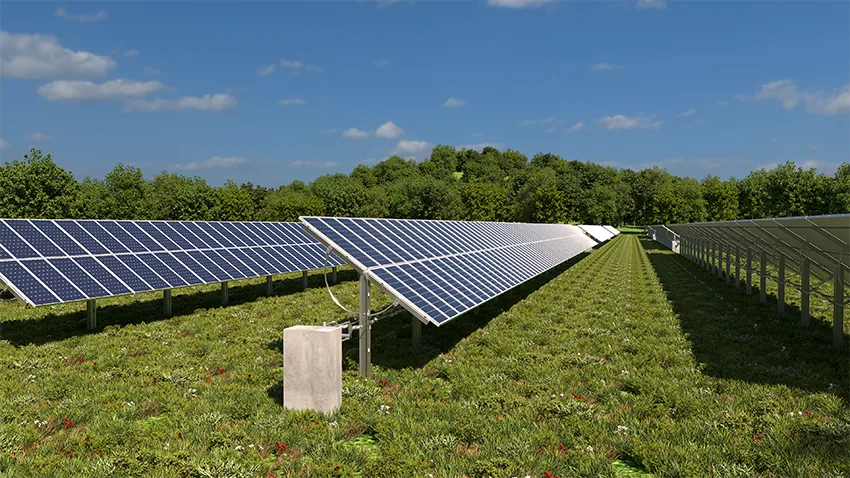
Rigid C-section main beam with an original cable-driven rotation mechanism: single-drive control for 800m ultra-long arrays, damper-free design against collapse risks, bearing-free and lubrication-free steering for the 25-year design life.
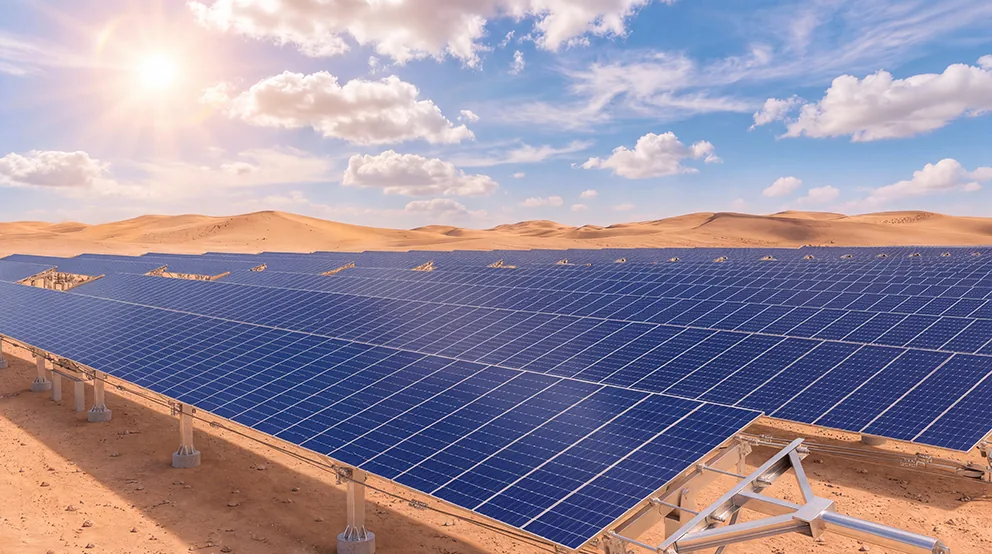
Based on proven cable-stayed and suspension bridge mechanics, tensioned steel cables enable ultra-long span layout with approx. 36% less steel and approx. 55% less shipping volume; the flexible cable system tolerates foundation offset up to 100mm.
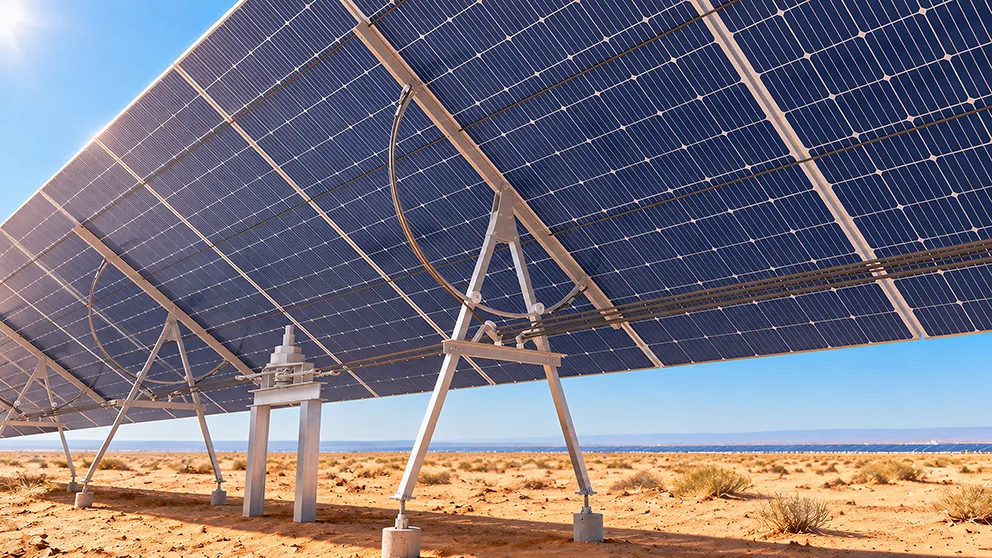
A-frame columns deliver superior stability at lower combined foundation cost; adjustable supports allow repeated correction after settlement, compatible with eco-friendly helical steel piles, permanently avoiding tracker jamming and decommissioning.
CurrentThree-layer global collaborative intelligent architecture | Compliant with domestic EMS and the 'four-ables' grid dispatch standards AI big-data dynamic strategy control, adapted to the electricity spot market, optimizing station-wide generation revenue AI meteorological pre-warning protection with active hazard avoidance for strong wind, hail and heavy snow Grouped collaborative control for extra-large power stations, with unified posture and stable output across the whole station A pragmatic technology philosophy: no inflated specifications, focused on safe, stable and efficient power generation.
Copyright © 2026 Tianjin Aqini New Energy Technology Co., Ltd.. All rights reserved Sitemap
 English
 日本語
 العربية
 French
 Deutsch
 Español
 Portuguese
 Русский
 Bahasa Indonesia
 中文