 English
 日本語
 العربية
 French
 Deutsch
 Español
 Portuguese
 Русский
 Bahasa Indonesia
 中文

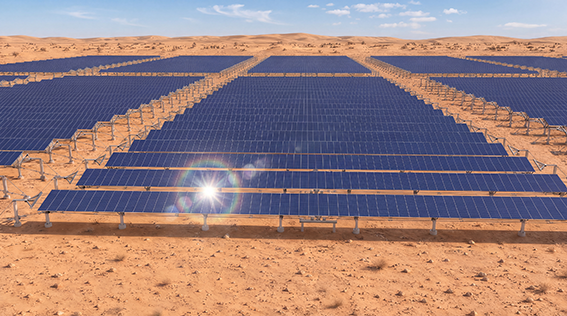
Within the renewable energy structural engineering community, a counterintuitive question has long lingered among asset owners, EPC contractors, structural engineers and investors: Is the technical barrier of a solar tracker — an outdoor electromechanical device built merely to follow the sun’s azimuth — genuinely higher than that of SpaceX’s reusable orbital rockets?
SpaceX was founded in 2002. The first three launches of Falcon 1 ended in successive failures, and it only successfully reached orbit on the fourth attempt, with a trial-and-error cycle of just six years. As of November 2026, the first-stage boosters of Falcon 9 have achieved routine reusability. The shortest turnaround time between inspections is only 21 days, with more than 550 total reuses and a single booster’s maximum reuse count hitting 32. Its launch reliability exceeds 99.8%. Starship has just completed its 15th orbital flight test. On this mission, 26 next-generation Starlink satellites were deployed. The spacecraft completed 14 orbits around Earth over a flight duration of more than 22 hours, marking the first time the launch tower’s mechanical arm captured and recovered the capsule mid-air. The booster failed to meet its planned recovery target and splashed down in the ocean under controlled conditions. For this team, every flight test, every anomaly and every loss delivers first-hand measured data. Their logic is straightforward and resolute: controlled trial and error is the fastest path for technological iteration. Aerospace engineering operates under extreme conditions including vacuum, ultra-high temperatures, aerodynamic shock waves and orbital attitude control, with an extremely narrow margin for error.
Let us draw an objective comparison: The fundamental concept of solar tracking dates back to the 1960s, nearly six decades ago, and its commercial rapid development has spanned more than 20 years. Cumulative investment in tracker R&D, prototype testing, wind tunnel simulation, field engineering and university research projects has surpassed SpaceX’s total R&D expenditure since its founding. The total number of mechanical, structural, electrical control, material and geotechnical engineers involved in tracker development also far outnumbers SpaceX’s core R&D team. Greater investment, longer development cycles and a far larger market, yet the contrast in outcomes is stark: aerospace continues to push technical boundaries, while the mainstream load-bearing architecture of solar trackers has seen almost no underlying innovation for decades.
The iteration efficiency of these two systems is worlds apart. Aerospace follows a positive closed loop: faults generate data, data drives design revisions, and deeper iteration brings higher reliability together with lower unit costs. By contrast, the solar tracker industry has long been trapped in an inefficient cycle: identical failures such as overturning, torsional distortion and drive jamming recur repeatedly. A large share of budgets and manpower is consumed on replication, reinforcement, accident remediation and later operational rectification. Disruptive solutions built on fundamental mechanical reconstruction rarely get opportunities for field validation.
This leads to a thought-provoking question for all stakeholders: Essentially a simple electromechanical follow-up structure that only tracks the sun’s position, a solar tracker does not need to withstand re-entry heat flux, execute precise orbital control or sustain a space vacuum environment. Can its technical sophistication really surpass that of a Falcon rocket? This question is enough to prompt deep reflection among structural engineers, asset owners and investors.
The root cause lies in inherent mechanical weaknesses of mainstream designs, which fall into three fundamental categories: First: Overhanging eccentric layout. Most trackers on the market mount modules outside the main shaft, shifting the center of gravity away from the shaft centerline and creating an eccentric load by design. Second: Reverse lever effect. When the support rotates to its maximum tracking angle, the outer cantilever amplifies the overturning moment induced by wind loads, continuously applying torsional load to the main shaft. Combined with the rotary drive assembly, this forms a reverse lever loading pattern. Third: Patch-style iterative optimization. Most manufacturers limit improvements to thicker profiles, additional bracing and localized reinforcement. All revisions are incremental fixes within the framework of this inherently flawed design, rather than a reimagining of the load-bearing system. Until these root defects are resolved, structural hazards will persist.
Looking at the industry’s on-site engineering reality: Wind damage, overturning, transmission jamming and tracking failure of trackers are far from rare. Failures strike across the full project lifecycle: some projects suffer wind damage while still under construction; many overturn after installation is finished but before acceptance and grid connection; numerous others pass acceptance and go online smoothly, only to collapse under wind loads within just a few months. Many power stations reveal structural risks after only a few years of operation, forcing new tenders, dedicated reinforcement works and continuous maintenance that erode project revenue and lock assets into a cycle of “construction — failure — reinforcement”.
This is the persistent pain point behind constant disputes between asset owners, EPCs and equipment suppliers: Buyers seek long-term stable, low-maintenance tracking solutions with 25-year full-lifecycle reliability. Most vendors can only offer conventional structures with proven market track records and large installed capacity. Both sides are aware that legacy designs suffer frequent failures, yet selection criteria are tightly bound to “field reference track record”. Innovative structures with no prior installation history, even with sound mechanical logic and clear advantages in torsion and overturn resistance, often struggle to secure tender opportunities. Mature designs with repeatedly verified defects are more likely to pass reviews simply because of their large installed base. This rule objectively protects outdated conventional solutions and raises the barrier for disruptive innovation.
Our team has spent more than a decade completing a full reconstruction of the load-bearing system to directly resolve these three root defects: eliminating eccentric cantilever arrangements and reverse lever loading, and rebuilding the force transfer architecture from first principles instead of relying on localized reinforcement. The goal is 25 years of stable service and elimination of such structural hazards at the source. I have proactively reached out to major energy platforms, offering free prototype deployment and on-site validation. Yet many practitioners and asset owners are accustomed to conventional design thinking. This disruptive approach falls outside their established mindset, and very few are willing to test it. This cognitive resistance resembles the pushback encountered when outdated conventions were challenged in earlier eras. Transformation is meant to remove hazards and cut long-term risks, yet many instinctively reject unfamiliar ideas, making technological progress extraordinarily difficult.
One bitterly ironic reality in the industry: many reference cases used as core tender evaluation benchmarks themselves suffer frequent failures and have already proven the weaknesses of conventional structures — yet they remain hard currency in procurement selections. New solutions with clear performance advantages are blocked by the requirement of “proven project references”. The path of copycat development remains wide open, while original fundamental reconstruction faces enormous barriers. Countless skilled engineers spend their time patching inherent flaws instead of redesigning the system.
The underlying logic of our new solution aligns with SpaceX’s development philosophy: well-conceived structural innovation improves reliability while lowering the levelized cost of electricity over the full asset lifecycle. SpaceX grants new designs opportunities for flight testing and judges performance using measured data. The solar tracking sector, however, often locks trial-and-error pathways behind reference record requirements.
If this trajectory continues, the tracker market will most likely retain conventional architectures with built-in mechanical weaknesses for a long time to come, and similar failures will keep recurring. This industry has never lacked capital, talent, orders or market demand. What it truly lacks are three things: a shared consensus to acknowledge inherent structural flaws; fair validation pathways for original designs; and selection standards that prioritize 25-year long-term reliability and full-lifecycle returns.
Breakthrough requires stepping away from the reflexive replication of old structures, respecting fundamental mechanical principles, and giving genuinely reimagined solar tracker load systems a chance to prove themselves through field testing.
Solar trackers operate outdoors and must endure decades of sand, salt mist and gusty winds, yet their operating conditions are nowhere near as complex as those of aerospace vehicles. Rockets are tested repeatedly, with designs discarded and revised after each flight, while the solar tracker industry remains trapped by legacy structures, entrenched mindsets and reference-record barriers. This contrast merits serious consideration from solar asset owners, EPC contractors and structural designers alike.
We look forward to a day when selection criteria return to technology itself and are no longer hostage to historical installation references. Innovative tracker designs with sound mechanical logic, low maintenance needs and high reliability can move smoothly to field validation, guiding the solar tracker sector back onto a path prioritizing technology and quality.